


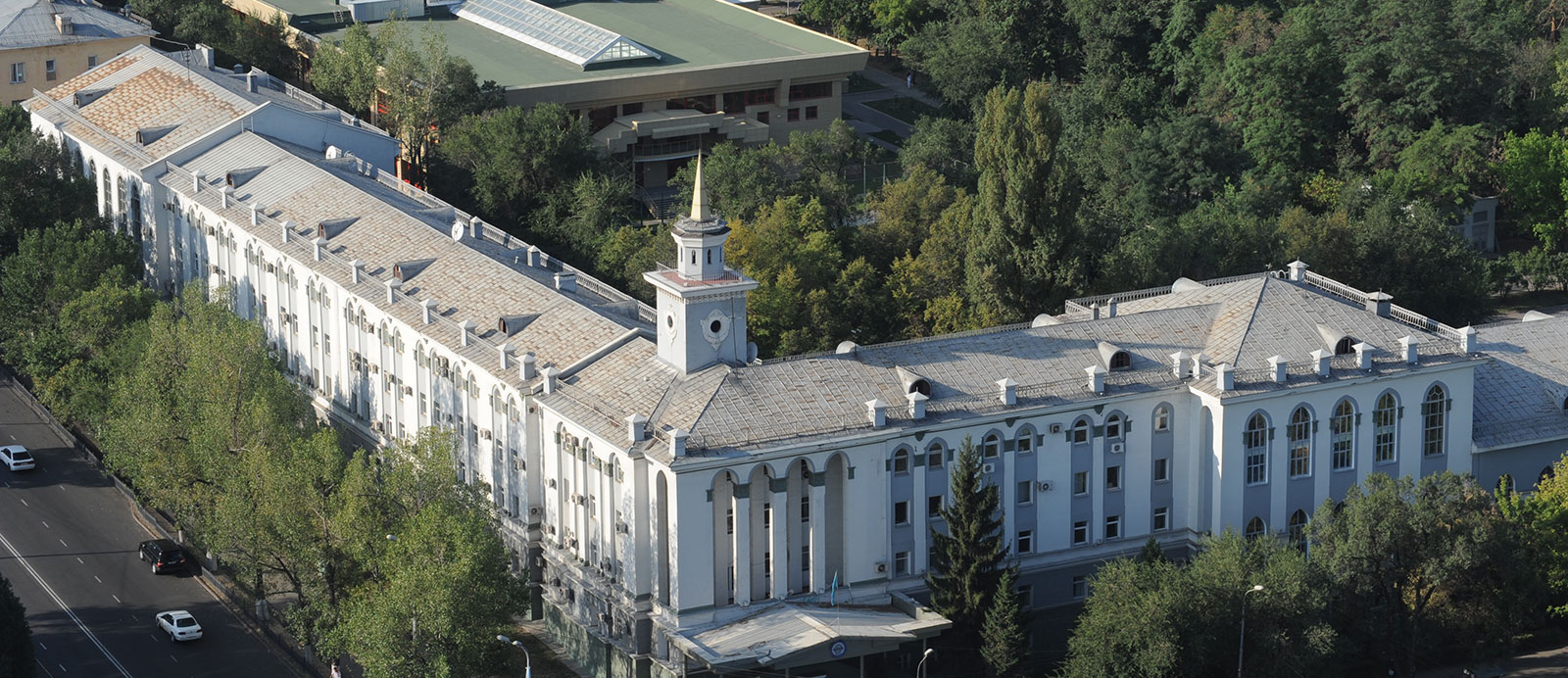
Open and honest communication together with transparent and accountable decision making are among the core values of KIMEP University, while participation of students, faculty, staff and outside stakeholders is one of the core principles in the management and governance of the University.The management and governance consists of Board of Trustees and Academic Council bodies and acts with respect to the regulations of the Charter of KIMEP.
Mission and Core Values
KIMEP UNIVERSITY MISSION STATEMENT
“The mission of KIMEP University is to develop well-educated citizens and to improve the quality of life in Kazakhstan, Central Asia, and beyond through teaching, research, learning, community service and the advancement of knowledge in business administration, social sciences, law, languages and other fields.
To fulfill this mission, KIMEP University offers undergraduate and postgraduate degree programs at the highest level of international educational standards to outstanding students, who will become equals to graduates of other world-class universities. KIMEP University students demonstrate leadership, talent, language capabilities, and academic excellence.
The mission statement aims to bring the core values to life, setting a practical goal for the operations of KIMEP community. All members of the community are acting with respect, openness, honesty and integrity and have a commitment to quality and intolerance of nepotism, corruption and discrimination.”
KIMEP University values:
KIMEP has seven core values. These values were developed by faculty, staff and students to set the guiding principles of KIMEP University employees and students. The Core Values are intended to guide the culture of KIMEP University, to set the foundation of both the university’s vision and mission. The core values as originally developed for KIMEP University were 12 value statements. At the request of KIMEP Student Association, the core values were revisited during the strategic planning process for the 2018-2021 Strategic Plan. The core values were consolidated to create seven values which are much easier to remember than the original 12.
1. An academic environment, which fosters integrity, mutual trust, free exchange of ideas, lifelong learning and encourages students, faculty, and staff to reach their highest potentials
2. Intellectual and personal honesty in learning, teaching, research, and service.
3. The well-being of students, faculty, and staff.
4. An inclusive environment for students, their parents, alumni, staff, faculty, and the wider community, blind to nationality, gender, age, religion, or other factors not related to the purposes of the University.
5. The development of the future leaders of society who will embrace the highest ethical standards;
6. The University’s high reputation and its important contribution to the growth of society.
7. Transparent decision making, free from favoritism, nepotism or corruption
Charter of KIMEP
TABLE OF CONTENTS
1. General provisions and legal status of NJSC ‘KIMEP University’
2. The subject, goals and objectives of the activities of NJSC ‘KIMEP University’
3. Founders
4. Rights and obligations of the shareholders
5. Shares of NJSC ‘KIMEP University’
6. Management of NJSC ‘KIMEP University’ (Bodies. General Meeting of Shareholders. Board of Trustees. Executive Committee. Councils)
7. Officials of NJSC ‘KIMEP University’
8. Affiliated persons of NJSC ‘KIMEP University’ Order of providing information on affiliated persons
9. Faculty, research and support staff
10. Admission to NJSC ‘KIMEP University’ students and attendees
11. Organization of academic and research activity
12. System of education and curriculum structure
13. System of assessment of student learning
14. Public organizations
15. Branches and representative offices of NJSC ‘KIMEP University’
16. Financial statements and audit of NJSC ‘KIMEP University’
17. Reorganization and liquidation of NJSC ‘KIMEP University’
Download the KIMEP Charter (.pdf)
Board of Directors
BOARD OF DIRECTORS
For the advancement of the strategic development of KIMEP University, utilization of current international educational technologies, and development of research activities and international academic collaboration, the Board of Directors consists of some of the most competent representatives of science, education, business and state bodies of the Republic of Kazakhstan and foreign countries. Members of the Board of Directors are elected at the General Meeting of Shareholders of KIMEP University.
The Board of Directors oversees the administration of KIMEP University with the exception of those issues which are ascribed by the Charter to the competence of the General Meeting of Shareholders.
Composition of the Board of Directors
The Board of Directors is composed of leaders in the spheres of academia, business and government bodies both in Kazakhstan and internationally. Members of the Board of Directors by the General Meeting of Shareholders of KIMEP University NJSC.
Currently, the Board of Directors consists of the following members:
1. Anastassios Sitsas – Chairman of the Board of Directors, representative of the shareholder Chan Young Bang;
2. Chan Young Bang – shareholder (60%), President of the President’s Cabinet;
3. Bibigul Amangeldinovna Assylova – representative of the shareholder (40%), Vice Minister of Education and Science of the Republic of Kazakhstan;
4. Kuanysh Assylkhanovich Yergaliyev – Representative of MSHE (40%);
5. Yerbol Sabyrzhanuly Akhmetov – Representative of CSPP of the MF of the RK;
6. Stephen John Beresford Nye – the independent Director;
7. Yerbol Zinaddinovich Suleymenov – Independent Director;
8. Zhanar Umirzakovna Bazarbekova – representative of the shareholder Chan Young Bang;
9. Jandosov Oraz Aliyevich – Independent Director;
10. Arman Yeskendirovich Meirmanov – Independent Director.
President’s Cabinet
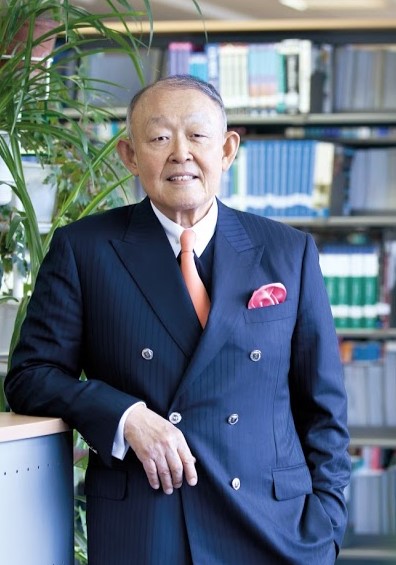
The President, the Chairman of the President’s Cabinet
Dr. Chan Young Bang was born in Korea in 1936. He graduated with honors from Yonsei University in 1963 and later moved to the United States to pursue advanced studies in economics. After earning his Ph.D. in Economics from the University of Colorado, he taught at the University of California, Los Angeles (UCLA), before obtaining a tenured position at the University of San Francisco in 1978.
In 1990, Dr. Bang was invited by Nursultan Nazarbayev, then President of Kazakhstan, to serve as Vice Chairman of the Expert Committee on economic reform and privatization, which the President personally chaired. He also served as Economic Advisor to the President, playing a vital role in shaping the country’s early market transition.
To further advance Kazakhstan’s transformation, Dr. Bang founded the Kazakhstan Institute of Management, Economics and Strategic Research (KIMEP) in 1992, with the mission to train professionals to the highest Western standards. After a brief return to South Korea, he rejoined KIMEP in 1997 as Chairman of the Board of Trustees and became President in 2000.
Under his leadership, KIMEP has evolved from a small state institute into an internationally recognized university. It now offers undergraduate, master’s, and doctoral programs across five colleges: the Bang College of Business, the College of Social Sciences, the Law School, the College of Humanities and Education, and the School of Computer Science and Mathematics.
Dr. Bang’s vision has been to build KIMEP University into a center of international academic excellence that produces impactful research and future leaders for Kazakhstan and the region. The university maintains strong partnerships with both the private and public sectors, as well as over one hundred leading universities worldwide.
Outside his professional life, Dr. Bang is a dedicated family man who enjoys reading widely and playing ping-pong daily – a sport in which he is known to be nearly unbeatable.
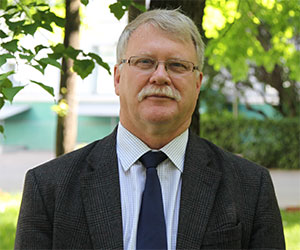
Provost and General Deputy to the President
Assists the President of the University and represents the President as commissioned. Acts on behalf of the
President as instructed by the President. Oversees all University matters: academic and economic operations, as
well as innovative and strategic operations of the University.

Vice President of Academic Affairs
VPAA is responsible for all operations of the University related to academic leadership, curriculum, personnel
management for the academic division, and budget planning and fiscal management for the academic division.
Supports and works in partnership with the faculty governance system. All academic areas report to the VPAA.

Vice President for Finance
Preparation of complete and accurate information on University operations and its property status;
Control over the use of material and financial resources in accordance with allocated budget and designation;
Prevention of negative outcomes of economic operations of the University and guarantee of its financial
stability.
Deans

Dean of the College of Humanities and Education
Provides strategic vision to the College of Humanities and Education, oversees the implementation of efficient
management systems and drives the College to improve and develop. Supervises the World Languages Preparatory
Program to ensure the highest level of student directed language instruction and support. Main priorities are:
to hire, to train and to develop the best language instructors in the region, and to ensure that the College
employees incorporate teaching and service excellence into their daily routines.

Dean of the Bang College of Business
To provide strategic leadership and strategic management in the academic and operational development of the
College
1. Ensure implementation of Institution-wide policies and regulations within the College
2. Ensure the proper use and allocation of all resources – physical, information, human and financial, including
delivery to plan within budget.
3. Contribute fully to the Institution’s corporate planning and communications processes and lead the
development of College Plans, including the setting of income generation targets.
4. Be responsible for the management of all staff in the College including, the maintenance of a safe and
healthy working environment

The Dean of Student Affairs
Christopher Bridges is Dean of Student Affairs and Associate Professor at KIMEP University in Almaty, Kazakhstan. He provides senior leadership across student life and support services and contributes to university-wide initiatives focused on student success, academic alignment, and institutional strategy.
Dr. Bridges teaches in KIMEP’s master’s and PhD programs in education, focusing on leadership, management, organizational change, and student development in higher education. He brings over twenty years of higher education leadership experience in the United States and internationally, including senior roles at Yale-NUS College, Art Academy of Cincinnati, and Mansfield University of Pennsylvania. Across these institutions, he has worked closely with presidents, provosts, faculty, and governing bodies to strengthen student outcomes, align academic and co-curricular learning, and advance institutional strategy.
In addition to campus leadership roles, Dr. Bridges has consulted with colleges and universities nationwide, advising senior leaders on student success strategy, equity-informed change management, and institution-wide improvement efforts. He holds a Ph.D. in Higher Education Leadership and Administration from Ohio University.

Dean of the College of Social Science
Dr. Gainous is the author of numerous publications, including three books with Oxford University Press, such as
Tweeting to Power: The Social Media Revolution in American Politics. He has taught at the University of
Louisville, Duke Kunshan University, and the University of Sharjah. He frequently serves as a media commentator,
has received multiple teaching and research awards, and is Co-Editor-in-Chief of the Journal of Information
Technology & Politics.

Dean of the School of Computer Science and Mathematics
Dr. Muhammad Arshad is the Dean and an Associate Professor at the School of Computer Science and Mathematics at KIMEP University in Almaty, Kazakhstan. He holds a PhD in Computer Science from Liverpool John Moores University in the United Kingdom and has more than two decades of international academic and leadership experience across the UK, Pakistan, Oman, and Kazakhstan. His career has focused on academic leadership, curriculum development, outcome-based education, and accreditation, alongside teaching and research in areas such as software engineering, cloud computing, the Internet of Things, and applied artificial intelligence. As dean, he is committed to preparing students with strong theoretical foundations and practical skills to succeed in a rapidly evolving digital world.

Dean of the School of Law
Richard C. Linstrom, Esq. is Dean of the School of Law and Associate Professor of Law at KIMEP University in Almaty, Kazakhstan. He holds a J.D. from the University of San Francisco and has extensive experience in legal practice and academic leadership. Prior to KIMEP, he served as Vice President and General Counsel at the University of Nevada, Las Vegas, led UNLV’s Singapore branch campus, and held senior academic leadership roles across Asia. Earlier, he worked for the Nevada Attorney General’s Office and as a prosecutor and defense attorney in the United States.
Academic Council
Authority
The establishment of the KIMEP Academic Council (KAC) was authorized by the General Meeting of Shareholders (2009) on the recommendation of the Board of Trustees of KIMEP (2009). The Council shall have the necessary powers vested in it by the Charter of KIMEP (amended and approved by the Ministry of Justice, RPK, 2009) to perform its duties, achieve the academic objectives and purposes of the Institute, and to make such reasonable academic policies for the education of its students.
Purpose
The purpose of the Academic Council of KIMEP University (the “Council”) is to manage the academic affairs of KIMEP University. The Council is the collegiate body of KIMEP University that gives Faculty Members of KIMEP University a formal instrumentality to express to the President’s Cabinet the considered recommendations of the Faculty. In as much as the explicit authority of the Council is not exclusive, the Council has the responsibility to manage any issue that may be deemed to come within the term “Academic Affairs.”
Composition of KIMEP Academic Council
The Council shall be composed only of faculty members of KIMEP University; defined in Part II (1) of these Bylaws, under procedures set forth in Part V. A Member of the Council shall serve as Chair of a Standing Committee.
Members of Academic Council
1. Each College granting or offering a degree shall have representation on the Council. The number of representatives shall be as follows:
3 representatives from the College of Social Sciences;
3 representatives from the Bang College of Business;
2 representatives from the College of Humanities and Education
1 representative from the School of Law
2. Each representative shall be selected by each College in a manner determined by that College.
3. Voting members include elected faculty members, Deans, and two student representatives from the KIMEP Student Association.
Total voting members: 16
Ex-Officio members without voting rights:
1. The Vice –President for Academic Affairs, the Directors of Recruitment and Admissions, Executive Education Center, Registry shall have the status of non-voting observers of the Council
[1] Charter on the Non-profit Joint-Stock Company “KIMEP University” (NJSC “KIMEP University”) approved at the General Meeting of Shareholders of Non-profit Joint-Stock Company “Kazakhstan Institute of Management, Economics and Strategic Research” (“KIMEP NJSC”), Protocol Nr. 14, on December 23, 2011 in Almaty [KIMEP University Charter], Art. 6.4.1.