


Psychology for a Changing World
On April 16th 2026 speakers from around Kazakhstan, and the world, will meet together in Almaty to explore current themes, theories, and future developments in Psychology. Within Kazakhstan, psychology is growing field, with great potential to provide solutions to a wealth of issues. In addition, psychology is a rapidly evolving field. This conference will be an excellent opportunity to hear about advances in academic and therapeutic psychology, as well as discuss practice issues relevant to Kazakhstan, such as registration and professional standards. Submissions of presentations on psychology research and themes are welcomed from both local and international delegates.
About
Where: The conference will be held at KIMEP University, 2 Abai Ave., Almaty 050010.
When: Thursday 16th April, 9 AM – 5 PM.
Language: The official language of the conference is English. All presentations will be delivered in English.
Format: The conference will be held fully in person. There will be no option for virtual attendance or online presentations.
Abstract Submission
Abstracts should be submitted via the Oxford Abstracts platform:
https://app.oxfordabstracts.com/stages/81799/submitter
Important Dates:
- Abstract submission deadline: 22 March 2026
- Notification of acceptance: by 27 March 2026
- Final registration deadline: 12 April 2026
Participant Registration
Participants may register using the following form:
https://forms.gle/Uf2Z9RNNnTLiJQ4S9
Registration Fee: 25,000 KZT
Fees are waived for KIMEP psychology students and for the presenters (only one waiver per presentation).
After submitting the registration form, participants will receive a confirmation email along with detailed payment instructions.
Please do not make any payment until you receive official confirmation and payment guidelines from the organizing committee.
For any inquiries contact nurbeine.k@kimep.kz
Guest Speakers
Plenary speaker:
Dr Ahmed Moustafa, Bond University, Australia
Addicts are trapped in the present: cognitive studies
Dr. Ahmed Moustafa is Professor of Psychology and Computational Modeling at School of Psychology, Bond University, Gold Coast, Queensland, Australia. Prior to moving to Bond University, Ahmed lived and worked in Sydney, USA, Qatar, and Egypt. Ahmed conducts research on computational and neuropsychological studies of addiction, schizophrenia, Parkinson’s disease, PTSD, depression, Alzheimer’s disease. He has published over 240 papers in high-ranking journals including Science, PNAS, Journal of Neuroscience, Brain, Neuroscience and Biobehavioral Reviews, Nature (Parkinson’s disease), Neuron, among others. Ahmed has obtained grant funding from Australia, USA, Qatar, UAE, Turkey, and other countries. Ahmed has recently published eleven books. In the last 10 years, Ahmed has published collaboratively with 71 colleagues, and has more than 510 co-authors, from 35 institutions in 14 countries. Ahmed is now editor-in-chief of Discover Psychology, a new journal by Springer Nature. Ahmed’s h index is 65 and number of citations is over 18,000 (Google Scholar).
(In-person presentation in English)
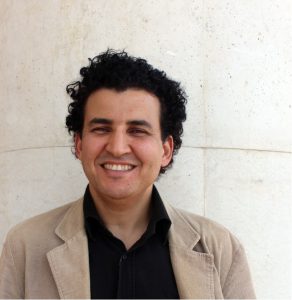
Invited guest speaker: Dr Jingtao Zhu, Universitat Autònoma de Barcelona & ClicAsia, Centre d´Estudis Orientals
How we learn syntax and meaning: Insights from first and second language acquisition
Dr. Jingtao Zhu obtained his PhD in Cognitive Science and Language from the Universitat Autònoma de Barcelona and lectures in linguistics at the Department of Catalan Philology at UAB. He is co-founder and executive director of ClicAsia, Centre d’Estudis Orientals (Barcelona and Madrid), and a research member of the Pathology and Language Acquisition Lab (CLT/APL). He serves on the board of the Chinese Association in Spain. Since 2024, he has been an expert member of the Spanish Society for Applied Linguistics and a senior advisor at the Cátedra China Foundation (Madrid).
(In-person presentation in English)

Invited guest speaker: Dr Liia Merzon, Varjo Technologies and Aalto University, Finland
Attention Deficit Hyperactivity Disorder and How to Measure It
(virtual presentation in English)
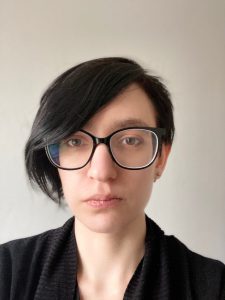
Dr. Liia Merzon completed a PhD at Aalto University in the Department of Neuroscience and Biomedical Engineering. They hold a BA in Clinical and Counselling Psychology and an MSc in Neuroscience. Their research background is studies of human attention, eye movements, and ADHD.
Invited virtual speaker
Andrew Ryder, Centre for Clinical Research in Health & Department of Psychology, Concordia University. Affiliated Researcher, Culture and Mental Health Research Unit, Jewish General Hospital, Montréal (Québec) Canada.
Cultural-Clinical Psychology: Coordinating Local Solutions to a Global Problem
Prof. Andrew Ryder received his PhD in Clinical Psychology from the University of British Columbia. Although he completed his coursework and practical training in clinical psychology, most of his research training was in cultural psychology. He has dedicated the past quarter-century to bringing these two fields closer together, conducting migrant and international comparison studies on emotional suffering and psychopathology in Arab, Chinese, Japanese, Korean, and Russian populations. In recognition of these efforts, he has received awards from Concordia University, the Canadian Psychological Association, and the International Association for Cross-Cultural Psychology. Prof. Ryder is also a licensed clinical psychologist in Québec.
(virtual presentation in English)

Invited guest speaker: Dr. Alina Gutoreva, Kazakh-British Technical University, Kazakhstan
Psychological Effects of Isolation: Preparing for the Kazakh SANA Space Program
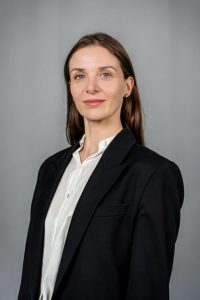
Dr Gutoreva collaborates with the Aerospace Committee of Kazakhstan on the creation of the International Astronaut Training Group and the development of neurotechnologies related to space missions. She was a delegate from Kazakhstan to the UN Conference on the Peaceful Uses of Outer Space. She researches the interaction of human cognitive and behavioral activity and artificial intelligence (AI), known as human-AI interaction. Specifically, her research group develops AI to model human cognitive processes such as decision-making, planning, and cognition. In her research, she uses methods from experimental psychology, cognitive and behavioral sciences, and machine learning.
(In-person presentation in English)
Conference Program
| Hall 1 Valikhanov Building | Hall 2 Valikhanov Building | |
| Time | KIMEP University, Department of Psychology, Undergraduate Student Presentations | |
| 9:00-9:15 | Conference Opening: Graham Pluck, KIMEP University | |
| 9:15-10:00 | Invited Speaker:
Alina Gutoreava, Kazakh-British Technical University, Kazakhstan “Psychological Effects of Isolation: Preparing for the Kazakh SANA Space Program” |
|
| 10:00-10:45 | Invited Speaker: Aelita Sadykova, Kamkor Zhurek (Caring Heart) Public Fund (NGO), Taraz, Kazakhstan
“Putting together a puzzle: Practicing psychotherapy in Kazakhstan versus in the United States” |
|
| 11:00-11:30 | Coffee Break | |
| 11:30-12:15 | Submitted studies:
Maksat Kenzhetay, KIMEP University, Kazakhstan “From Functionality to Experience: Emotional Design, Gamification, and the Psychology of Learning in a Changing World” Svetlana Abdykaimova, Ala-Too International University, Kyrgyzstan “Using a Neuropsychological Approach to Activating Students’ Cognitive Activity” |
KIMEP University, Department of Psychology, Undergraduate Student Presentations |
| 12:15-13:00 | Invited Online Speaker:
Liia Merzon, Varjo Technologies and Aalto University, Finland “Attention Deficit Hyperactivity Disorder and How to Measure It” |
|
| 13:00-14:00 | Lunch | |
| 14:00-14:45 | Roundtable Discussion
Tomas Jurcik, Aelita Sadykova, Sholpan Primbetova, et al. “Is Registration of Psychologists Needed in Kazakhstan?” |
Invited Speaker:
Jingtao Zhu, Universitat Autònoma de Barcelona & ClicAsia, Centre d´Estudis Orientals, Spain “How we Learn Syntax and Meaning: Insights from First and Second Language Acquisition” |
| 14:45-15:30 | Special Guest Speaker:
Ahmed Moustafa, Bond University, Australia “Addicts are Trapped in the Present: Cognitive Studies” |
|
| 15:30-16:00 | Submitted study:
Santiago De Lasala Porta et al., KIMEP University, Kazakhstan “The Impact of AI on Student Character: An Aristotelian Virtue Ethics Perspective” |
Submitted study:
Eldar Madumarov, KIMEP University, Kazakhstan “Transactional Altruism: A Formal Model of Social Media, Visibility, and the Crowding Out of Intrinsic Motivation” |
| 16:00-16:15 | Short Break | |
| 16:15-17:00 | Invited Online Speaker:
Andrew Ryder, Concordia University, Canada. “Cultural-Clinical Psychology: Coordinating Local Solutions to a Global Problem” |
Hena Fatima & Tinatin Zhakshylykova, Ala-Too International University, Kyrgyzstan
“A Comparative Study of Personal Identity, Self-Efficacy, Values, and Personality Traits Among Adolescents from Minority and Majority Communities” Aruzhan Audanbekova & Sham Haidar, KIMEP University, Kazakhstan “Sustaining Extreme Work: Motivation, Well-being, and Rapid Professional Development in a High-Growth Startup in Kazakhstan” |
| 17:00-17:15 | Conference closure and photos |