



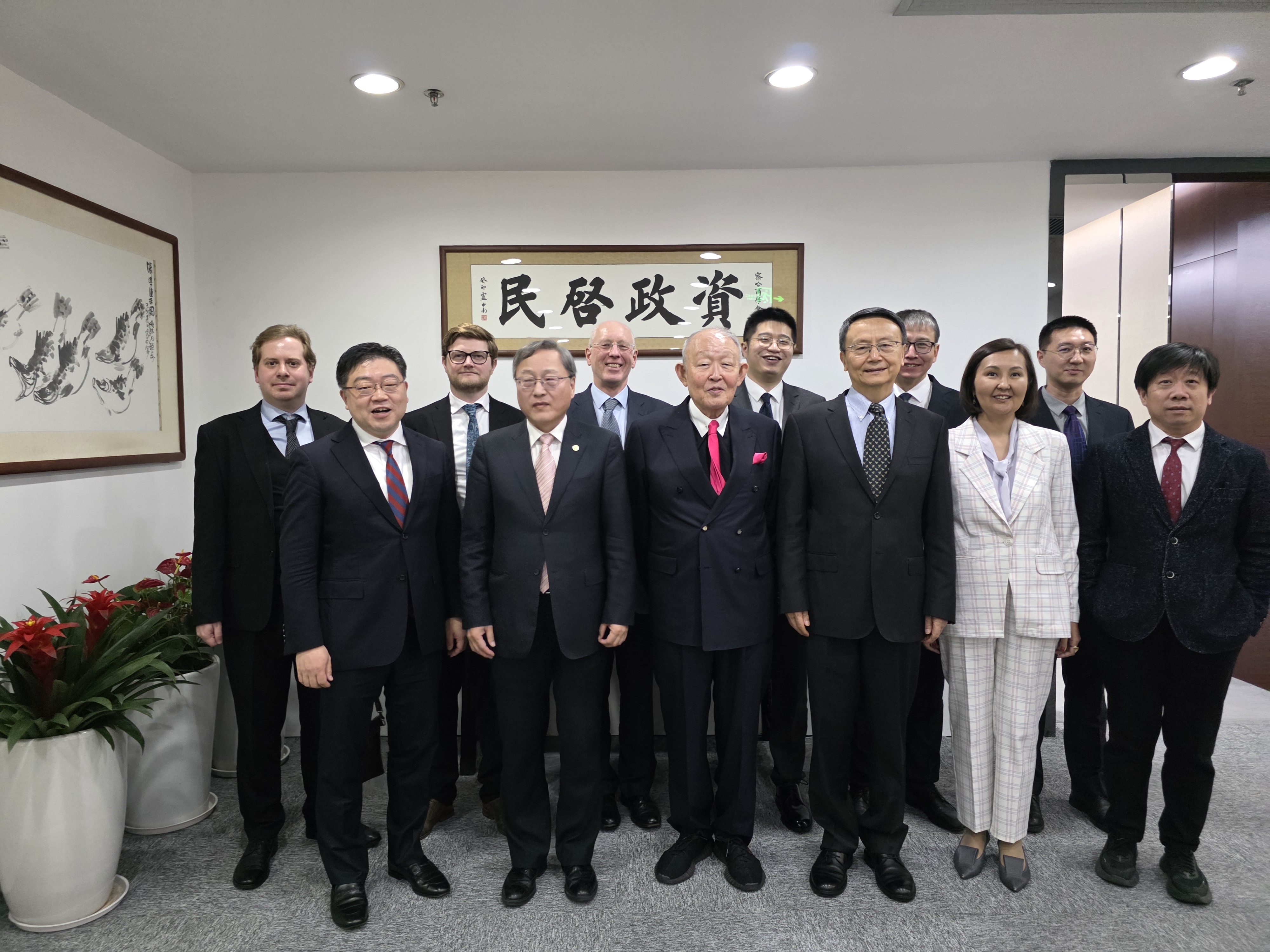
On January 12, 2026, the DPRK Strategic Research Center participated in a major academic symposium held in cooperation with the Charhar Institute in Shenzhen, China. The symposium was sponsored and hosted at the headquarters of TCL Group and constituted the central academic event of the delegation’s visit. The symposium brought together leading Chinese and international scholars to examine China’s role in promoting peace, stability, and denuclearization in Northeast Asia.
The symposium was formally opened by Mr. Zhang Jianguo, Secretary General of the Charhar Institute and former Chinese Ambassador to Mauritania and Tunisia. Opening remarks were followed by an address from Dr. Chan Young Bang, Principal Investigator of the DPRK Strategic Research Center at KIMEP University. Discussions were structured around three thematic clusters focusing on regional security dynamics and the future of the Korean Peninsula.
The first session, Strategic Principles for Stability on the Korean Peninsula, featured Professor Jia Qingguo, Senior Fellow at the Charhar Institute and former Dean of the School of International Studies at Peking University, who presented on “No War, No Nuclear Weapons, and a Negotiated Settlement: Continuity in China’s Foreign Policy toward the Korean Peninsula.” Dr. Anar Shaikenova, Director of the DPRK Strategic Research Center, followed with an analysis of how China’s Global Security Initiative could revive multilateral denuclearization talks.
The second session addressed regional trust and security architecture. Professor Zhang Yun of Nanjing University discussed confidence- versus trust-building in reordering Northeast Asian security and China’s role within it. From the KIMEP delegation, Mr. John Everard, former UK Ambassador to the DPRK, examined the balance between deterrence and engagement with North Korea.
Following a tea break, the final session included Professor Wang Chong of Zhejiang International Studies University, who spoke on the China–Japan–Korea Free Trade Area in the context of the U.S. Indo-Pacific strategy. Mr. Ulan Nukan, Director of the China Affairs Office at KIMEP, presented a critical assessment titled “Why Collusion Is a Risk, Not a Solution, to China’s Strategic Dilemma on the Korean Peninsula.” The session concluded with Dr. Qian Zhengyu of the Liaoning Provincial Party School, who discussed the foundations of China–DPRK relations and China’s policy options on the nuclear issue.
Dr. Chan Young Bang closed the symposium with reflections on why China’s leadership, under President Xi Jinping, must pursue a bold diplomatic initiative toward Pyongyang. The symposium was marked by lively debate and an extensive question-and-answer session. Discussions continued over dinner, after which participants jointly drafted a policy recommendation reflecting the symposium’s key conclusions.